Running a small business is already a lot of work. You have customers to deal with, products or services to manage, bills to pay, and a hundred other things competing for your attention.
Then comes marketing.
You know you need to be online, but where do you even start?
Should you focus on Instagram? SEO? Google Ads? Your website? Videos? Blogging? Or all of them?
This is exactly why having a digital marketing strategy for small business matters.
A strategy gives your marketing some direction. Instead of randomly posting on social media or spending money on advertisements, you can decide what you want to achieve, who you want to reach, and which channels are actually worth your time.
And in 2026, having a strong online presence is more important than ever.
In this guide, we’ll look at how a small business can build a practical digital marketing strategy in 2026—even without a huge marketing budget.
What Is a Digital Marketing Strategy?
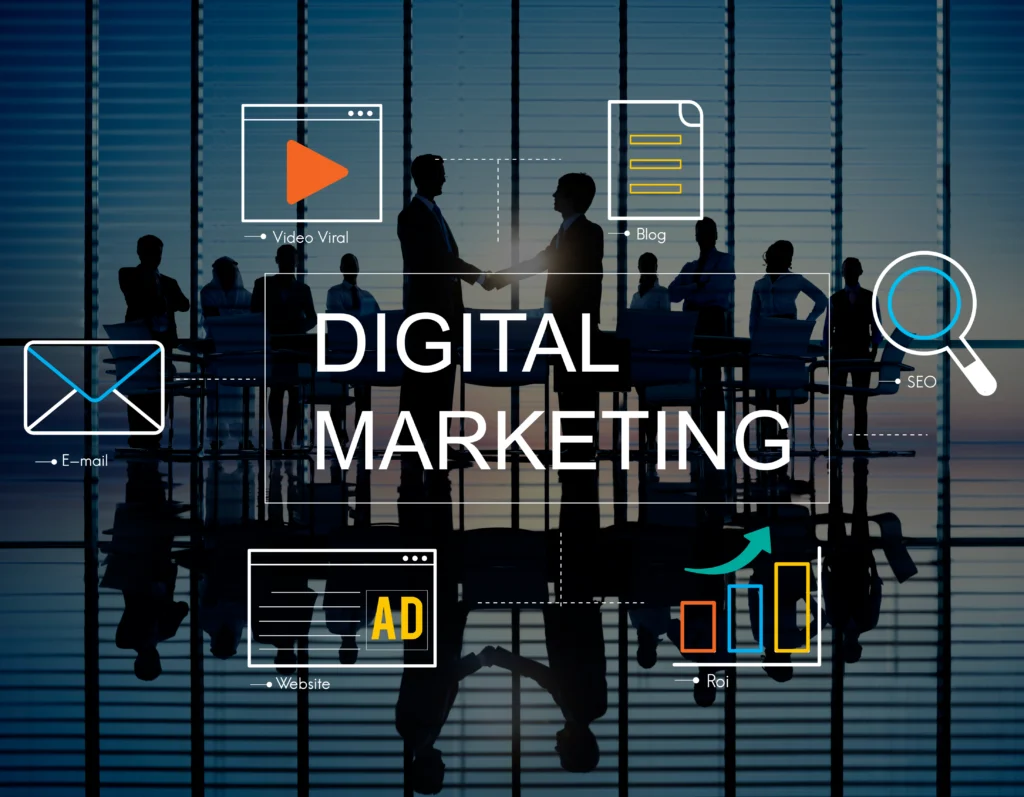
A digital marketing strategy is simply a plan for using online channels to promote your business and reach your customers.
That can include your:
- Website
- Search engine optimization (SEO)
- Social media
- Content marketing
- Email marketing
- Online advertising
- Local SEO
- Analytics
The important part is that these activities shouldn’t exist separately.
Imagine someone discovers your business on Instagram. They become interested, search for your business on Google, visit your website, read a few reviews, and eventually contact you.
That’s a customer journey.
Your digital marketing strategy should make that journey as simple and trustworthy as possible.
1. Start by Defining Your Goal
Before worrying about keywords, Instagram posts, or advertisements, ask yourself one simple question:
What do I actually want my marketing to achieve?
Different businesses will have different answers.
You might want to:
- Get more enquiries
- Increase online sales
- Generate leads
- Get more phone calls
- Bring customers into your physical store
- Increase website traffic
- Build awareness for your brand
Try to turn your goal into something measurable.
For example, instead of saying:
“I want more customers.”
you could say:
“I want to generate 30 qualified enquiries from my website every month.”
Now you have something you can actually track.
This is an important first step because every part of your marketing should eventually connect back to your business goals.
2. Understand Who Your Customers Are
One of the biggest mistakes small businesses make is trying to market to everyone.
Your product or service might technically be useful to many people, but there is usually a specific group that is most likely to buy from you.
Take some time to understand them.
Ask yourself:
- Who is my ideal customer?
- What problem are they trying to solve?
- What questions do they have?
- What might stop them from buying?
- What information do they need before making a decision?
- Where do they spend time online?
For example, a local restaurant might attract customers through Google searches, Instagram posts, food videos, and online reviews.
A B2B company might get better results through Google Search, LinkedIn, industry content, and email.
Your audience should influence your strategy—not the other way around.
3. Make Your Website Your Online Home
Your website is one of the most important parts of your digital presence.
Think of it as your online home.
Someone might discover you through Instagram or Google, but your website is often where they go to learn more and decide whether they can trust your business.
A good small business website doesn’t have to be complicated.
It needs to be:
- Easy to navigate
- Mobile-friendly
- Fast-loading
- Secure
- Professionally presented
- Easy to contact
- Clear about your products or services
When someone visits your homepage, they should quickly understand:
What do you do?
Who do you help?
Why should they choose you?
What should they do next?
Don’t make visitors work to find the answers.
A clear website can make the difference between someone leaving and someone becoming a customer.
4. Use SEO to Help People Find You
You can have a beautiful website, but it won’t help much if nobody can find it.
That’s where SEO (Search Engine Optimization) comes in.
SEO is the process of improving your online presence so that search engines can better understand your content and people can discover your business through relevant searches.
Think about your own behavior.
When you need something, you probably search for it.
Maybe:
“best cafe near me”
or:
“digital marketing freelancer in Kozhikode”
or:
“best birthday cake shop near me.”
These searches are valuable because the person already has an intention.
Start with keyword research
Find out what your potential customers are searching for.
Look for keywords related to:
- Your products
- Your services
- Problems you solve
- Questions customers ask
- Your location
Don’t just choose keywords because they have a large search volume.
A keyword with fewer searches can sometimes be more valuable if the people searching it are much more likely to become customers.
Optimize your website pages
Your important pages should have:
- Clear page titles
- Relevant headings
- Descriptive URLs
- Helpful content
- Optimized images
- Internal links
- Useful meta descriptions
But don’t force keywords into every sentence.
For example, if your target keyword is “digital marketing strategy for small business,” you don’t need to repeat it again and again.
Write for people first.
Use the keyword naturally where it makes sense.
5. Don’t Ignore Local SEO
If your business serves customers in a particular city or area, local SEO can be extremely useful.
Imagine someone searches:
“digital marketing agency near me”
or:
“best bakery in Kozhikode.”
You want your business to have a chance of appearing when that search happens.
Make sure your business information is accurate across relevant online profiles.
Your business name, address, phone number, website, opening hours, and services should be kept up to date.
Customer reviews can also play an important role in building trust with potential customers.
For local businesses, being visible when someone nearby is actively looking for what you offer can be incredibly valuable.
6. Create Content That Helps People
Content marketing is another important part of a digital marketing strategy for small business.
But you don’t need to publish something every day.
Instead, think about the questions your customers ask you.
Those questions are content ideas.
For example, a digital marketer could write about:
- How much does digital marketing cost?
- How does SEO work?
- Why isn’t my website getting traffic?
- How can a small business get more Instagram customers?
- Should I use Google Ads?
- How can I improve my local SEO?
These topics are useful because they’re based on real problems.
A good blog post shouldn’t exist just because you want another page on your website.
It should exist because it helps someone.
When you consistently answer useful questions, you can attract people who may eventually become customers.
7. Choose Social Media Carefully
You don’t need to be on every social media platform.
In fact, trying to maintain five or six platforms at once can quickly become exhausting.
Instead, find out where your audience actually spends time.
For some businesses, Instagram might be the best place to showcase products and build a visual brand.
For others, LinkedIn may be more useful for reaching professionals and decision-makers.
YouTube can work well for businesses that can explain, demonstrate, or teach through video.
The goal isn’t to collect social media accounts.
The goal is to be present where your potential customers are.
Don’t make every post a sales pitch
People don’t follow businesses because they want to see advertisements all day.
Teach them something.
Answer their questions.
Show your process.
Share useful tips.
Tell your story.
Show your products or services naturally.
Over time, this can help build familiarity and trust.
8. Consider Paid Advertising
Organic marketing is valuable, but sometimes you need faster visibility.
That’s where paid advertising can help.
Depending on your business, you might use:
- Google Ads
- Social media advertising
- Display advertising
- Video advertising
- Remarketing
But don’t simply put money into an advertisement and hope for the best.
Before starting a campaign, know:
Who are you targeting?
What are you offering?
Why should they care?
Where will the advertisement take them?
What action do you want them to take?
Your advertisement and landing page should work together.
If your ad promises one thing but the landing page is confusing or unrelated, you can end up wasting your budget.
9. Turn Website Visitors Into Customers
Getting traffic is only part of the job.
The next challenge is turning that traffic into enquiries, bookings, or sales.
This is where conversion optimization comes in.
Look at your website from a visitor’s perspective.
If they want to contact you, can they find your contact information quickly?
If they want to buy something, is the process simple?
If they’re considering your service, can they easily understand what you offer?
Small improvements can make a big difference.
You can:
- Add clearer calls to action
- Simplify contact forms
- Display testimonials
- Explain your services more clearly
- Improve page speed
- Make important information easier to find
Don’t make people search for the next step.
Guide them.
10. Use Email Marketing to Stay Connected
Not everyone who visits your website will become a customer immediately.
Someone might discover your business today and make a purchase several weeks or months later.
Email marketing gives you a way to stay connected with people who have chosen to hear from your business.
You could send:
- Helpful tips
- New blog posts
- Product updates
- Special offers
- Useful resources
- Company news
The key is to provide value.
If every email is simply:
“BUY NOW!”
people will quickly stop paying attention.
Instead, give them a reason to open your emails.
11. Measure What Matters
One of the best things about digital marketing is that you can measure your results.
You can find out:
- Where your visitors came from
- Which pages they visited
- Which content performed well
- Which keywords brought traffic
- How many people contacted you
- Which advertisements generated leads
But don’t get too focused on vanity metrics.
A post with 50,000 views might look impressive.
However, if another post with 5,000 views generates ten genuine enquiries, the second post may be much more valuable to your business.
So don’t ask only:
“How many people saw this?”
Also ask:
“Did this help my business?”
That’s the number that matters.
A Simple Digital Marketing Strategy for Small Businesses
If you’re just getting started, don’t try to implement everything at once.
Here’s a simple approach.
Month 1: Build the foundation
Focus on:
- Defining your target audience
- Setting marketing goals
- Improving your website
- Setting up analytics
- Researching keywords
- Optimizing important pages
Month 2: Start creating content
Focus on:
- Publishing useful blog posts
- Creating social media content
- Improving local SEO
- Building internal links
- Collecting genuine customer reviews
Month 3: Test and improve
Look at your results.
Find out:
- Which pages are getting traffic?
- Which keywords are performing?
- Which content gets engagement?
- Which channels generate enquiries?
- Where are visitors leaving your website?
Then make improvements.
You don’t need to get everything perfect from the beginning.
You need to start, learn, and improve.
Common Digital Marketing Mistakes Small Businesses Make
Trying to Do Everything
Being everywhere doesn’t automatically mean you’re doing good marketing.
Choose the platforms and strategies that make sense for your audience.
Focusing Only on Followers
Followers are useful, but they aren’t the same as customers.
A smaller audience that genuinely wants what you offer can be much more valuable.
Ignoring SEO
If people are searching for your products or services, you should make it easy for them to find you.
Creating Content Without a Purpose
Don’t publish something just because you haven’t posted anything this week.
Ask yourself:
“How does this help my audience?”
Spending Money Without Tracking
If you’re running paid campaigns, track the results.
Otherwise, you won’t know whether your money is being spent effectively.
Expecting Instant Results
Some marketing activities can produce results quickly.
Others, especially SEO and content marketing, often take time.
The important thing is to stay consistent and keep improving.
What Should a Small Business Focus on in 2026?
There are always new tools, platforms, and marketing trends appearing.
It can be tempting to chase every one of them.
But the fundamentals haven’t disappeared.
A strong digital marketing strategy for small business should still focus on:
Understanding your audience.
Creating a useful online presence.
Being discoverable through search.
Creating content that helps people.
Building trust through social media and reviews.
Using advertising carefully.
Measuring results.
And then doing it all a little better next time.
You don’t need to follow every trend.
You need to understand your customers.
Final Thoughts
Building a digital marketing strategy for small business in 2026 isn’t about having the biggest advertising budget or being active on every platform.
It’s about being intentional.
Know who you’re trying to reach.
Know what you want to achieve.
Make it easy for people to find you.
Give them useful information.
Build trust.
Make it simple for them to take action.
And measure what happens.
Digital marketing isn’t a one-time project that you finish and forget about.
It’s an ongoing process:
Plan → Create → Publish → Measure → Improve.
Start with the basics, stay consistent, and let your customers and your data guide you.
That’s how a small business can build a stronger digital presence—one step at a time.
Frequently Asked Questions
What is a digital marketing strategy for a small business?
A digital marketing strategy is a plan for using online channels such as websites, SEO, social media, content marketing, email, and advertising to reach customers and achieve specific business goals.
What is the best digital marketing strategy for a small business?
There isn’t one strategy that works for every business. A strong starting point is to understand your audience, build a good website, invest in SEO, create useful content, use relevant social media platforms, and measure your results.
Is SEO important for small businesses in 2026?
Yes. SEO can help small businesses become more visible when potential customers search for relevant products, services, or information online.
Should a small business focus on SEO or social media?
It depends on the business and its customers. SEO can help you reach people who are actively searching, while social media can help you build awareness and relationships. Many businesses can benefit from using both.
How much does digital marketing cost for a small business?
There is no fixed cost. It depends on the industry, goals, competition, marketing channels, and whether the work is handled internally or by a freelancer or agency. Businesses can start with low-cost organic strategies and increase their investment as they learn what works.
How long does it take for digital marketing to work?
It depends on the channel. Paid advertising can generate traffic relatively quickly, while SEO and content marketing generally require consistent effort and patience.
What should a small business do first?
Start by understanding your target audience and setting a clear goal. Then make sure your website is strong before expanding into SEO, content marketing, social media, and paid advertising.